Trifocal lenses for near intermediate and distant vision
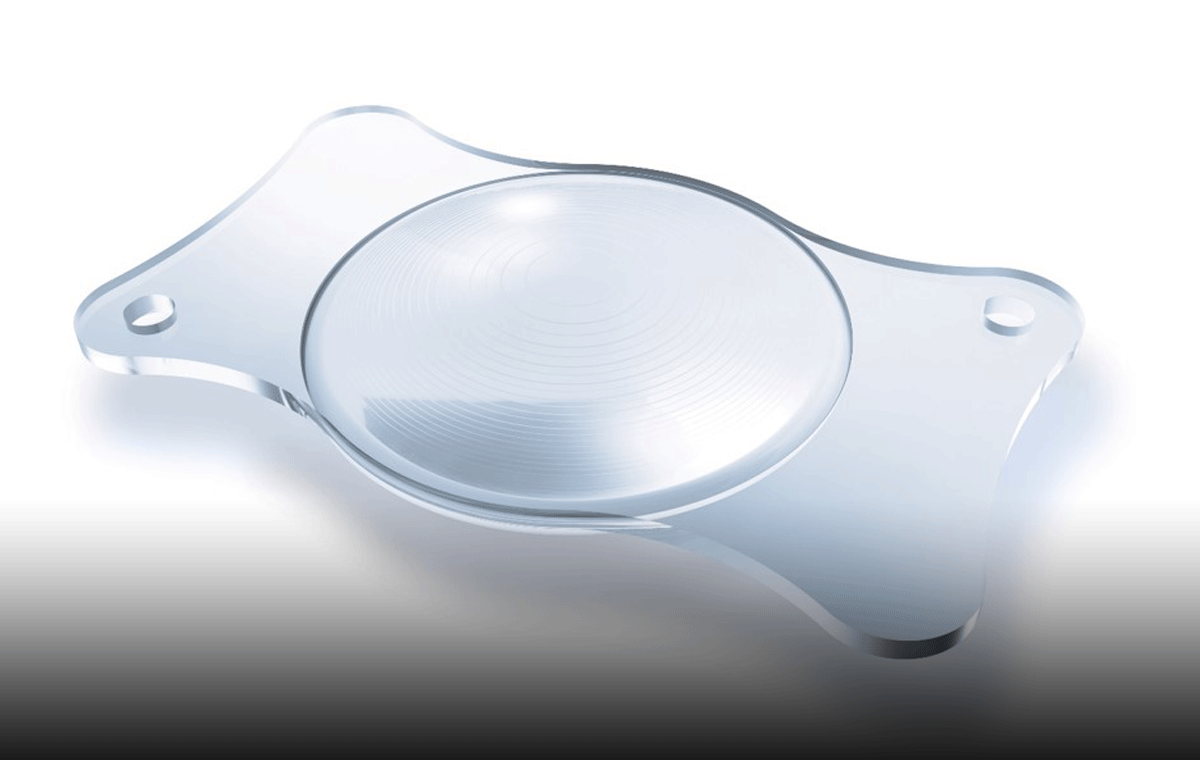
Trifocal lenses and Acon IQ vivity ringless multifocal lens
These latest-generation lenses are called trifocals because they offer clear vision at intermediate distances, which is generally anything at arm’s length [for laptops, computers, vehicle dashboards etc.] This is in addition to providing near and far vision.
Do you know that …Now you can get rid of glasses for near,distance and intermediate distances [for laptop,computer,car dashboards] with latest ring less multifocal lenses[Alcon vivity]
Ringless multifocal Alcon IQ vivity
Vivity is a first-of-its-kind, non-diffractive extended depth of focus IOL with Alcon’s proprietary non-diffractive X-WAVE™ technology, which stretches and shifts light without splitting it. Vivity delivers monofocal-quality distance (far) with excellent intermediate (at arm’s length) and functional near vision (up close).It is surgeons first choice for RLE procedures worldwide.
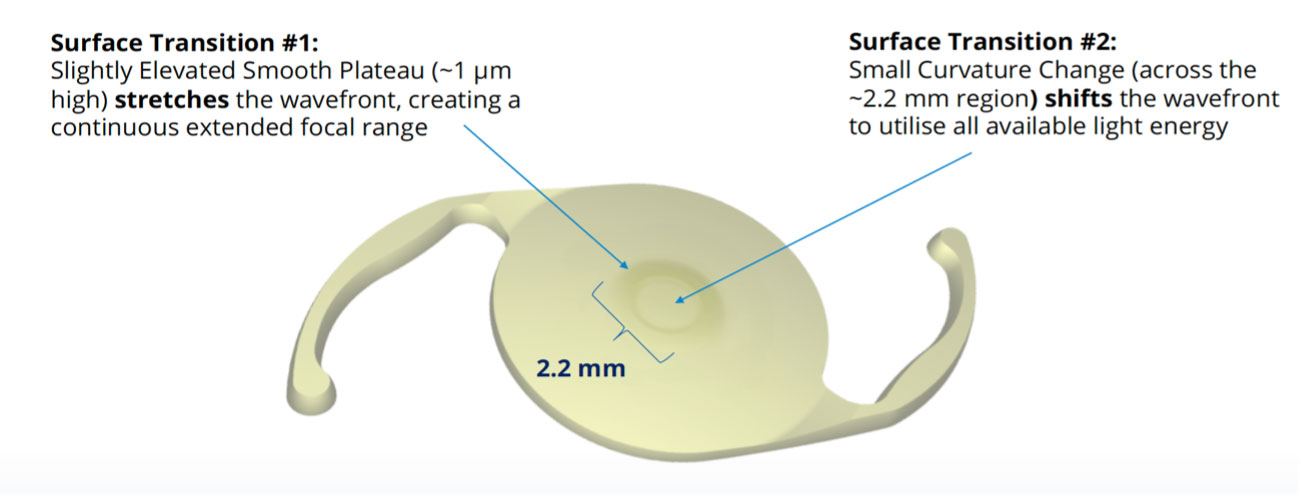
The lens expands Alcon’s growing portfolio of presbyopia-mitigating IOLs to meet the needs of cataract patients who are interested in restoring their visual performance and improving their lifestyle.
Advantages are better contrast,night vision,lack of haloes and glares at night
What’s more, trifocal lenses allow a person to switch effortlessly between all three distances – near (reading) distance, long distance and the in between distances. Vision is clear at all those points – something the previous multifocal IOLs couldn’t achieve.That is why more and more patients are choosing these lenses for correction of presbyopia [which involves the gradual loss of the eye’s ability to focus on close objects, such as smart phones, computers, books and menus as one ages more than 40 years]
More about Alcon IQ vivity [according to their press release]
Vivity is a first-of-its-kind, non-diffractive extended depth of focus IOL with Alcon’s proprietary non-diffractive X-WAVE™ technology, which stretches and shifts light without splitting it.1 Vivity delivers monofocal-quality distance (far) with excellent intermediate (at arm’s length) and functional near vision (up close).*2 The lens expands Alcon’s growing portfolio of presbyopia-mitigating IOLs to meet the needs of cataract patients who are interested in restoring their visual performance and improving their lifestyle.
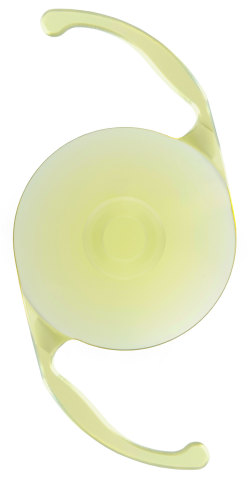 “With the introduction of Vivity, Alcon continues to demonstrate our ongoing commitment to growing our IOL portfolio and delivering differentiated innovations that meet surgeon and patient needs,” said Sergio Duplan, President, North America at Alcon. “We now offer two next-generation presbyopia-mitigating IOL options, with the PanOptix Trifocal for patients who want to be more spectacle independent at all distances and Vivity for patients who seek to improve their intermediate and near vision, with a monofocal-like visual disturbance profile.”
Also available in toric designs, Vivity is built on Alcon’s trusted and proven AcrySof IQ IOL platform that has been implanted in more than 125 million eyes globally.5 According to results from a U.S. clinical trial, patients who had the Vivity lens implanted experienced renewed vision and lifestyle benefits, including:2
- 94% and 92% of Vivity patients reported very good or good vision at distance and arm’s length, respectively, without glasses in bright light, with vision of 20/20 at distance and greater than 20/25 at intermediate*†2
- Comparable visual disturbance profile to a monofocal IOL*2
“The Vivity lens is a disruptive technology that fills a gap for eye surgeons as a presbyopia-mitigating IOL option for those patients who are not candidates for a diffractive IOL platform, but want some spectacle independence,” said Dr. Cathleen McCabe, Chief Medical Officer, Eye Health America and Medical Director, The Eye Associates. “This lens has a monofocal-like visual disturbance profile, a low incidence of severe or very bothersome glare and halos, and provides a continuous extended range of vision which can meet the needs of many cataract patients.”
Vivity received FDA approval in February 2020, and it was made available to select U.S. ophthalmologists in September 2020 during a pilot phase, ahead of the current national launch.
Cataract patients nowadays have very high expectations concerning their visual performance after IOL implantation. Wishing to maintain their active lifestyle into high age, they require a solution that enables them to perform most daily activities without visual aids. The latest leading trifocal technology t allows you to offer our patients maximum spectacle independence.
Artificial lens implants have been part of modern eye surgery for many decades. Referred to by surgeons as intraocular lenses (IOLs), these tiny implants replace the natural lens of the eye, which is removed during cataract surgery.
However, these lenses are being used more frequently as a primary vision correction procedure for people in the 55+ age range[presbyopic age..see at the end what is presbyopia], as they would not benefit from laser eye surgery to free them from glasses.
Designed to replace the natural focusing power of the eye, early artificial lenses were limited in their ability to adjust vision from one distance to another. Today, lens technology has improved to the point where over 55-year-olds can be virtually free from glasses.
Multifocal lenses ….Bifocal vs Trifocal lenses
For the past five or so years, the range of multifocal lenses has increased significantly. These were developed to contain more than one lens power in order to restore a fuller range of clear vision – that is, at distance, intermediate and near vision.
However, bifocal lenses weren’t suitable for all patients because they sometimes came with compromises, including less than perfect mid-range (intermediate) vision [for laptops ,computers,vehicle dashboards etc.] and the possibility of glare and haloes at night.
Many eye surgeons are now making way for the newest generation of IOLs. Lens designers have introduced trifocal lenses, which aim to provide better quality vision at all distances, with less compromise.
When would a surgeon use TRIFOCAL lens?
These tiny lenses are used to replace the natural lens of your eye. In most cases, this is during a cataract procedure. However, more and more people are having this surgery because they want to get rid of their glasses.
If you’re in the age group requiring near glasses to read and wearing multifocal glasses or switching between different pairs of glasses to see properly, you may be a candidate for a trifocal IOL.
Are all trifocal lenses the same?
These may be the very latest technical advances, but they represent many years of development. Several major suppliers have been working on their own version of trifocal lenses for quite a while now.
Many surgeons expect trifocal lenses to be the future of customised vision. The results their patients are experiencing are encouraging, and more and more surgeons are now confident enough to offer trifocal lenses to cataract patients.
Common trifocal lenses available are
ZEISS AT LISA tri [GERMANY],
ALCON PAN OPTIX [USA],
Biotech OPTIFLEX TRIO [Ireland] Trifocal IOLs*
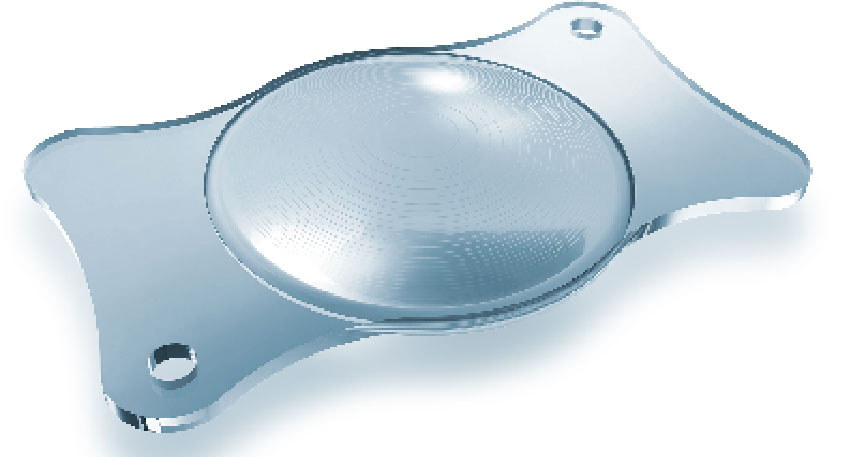
Zeiss trifocal lens
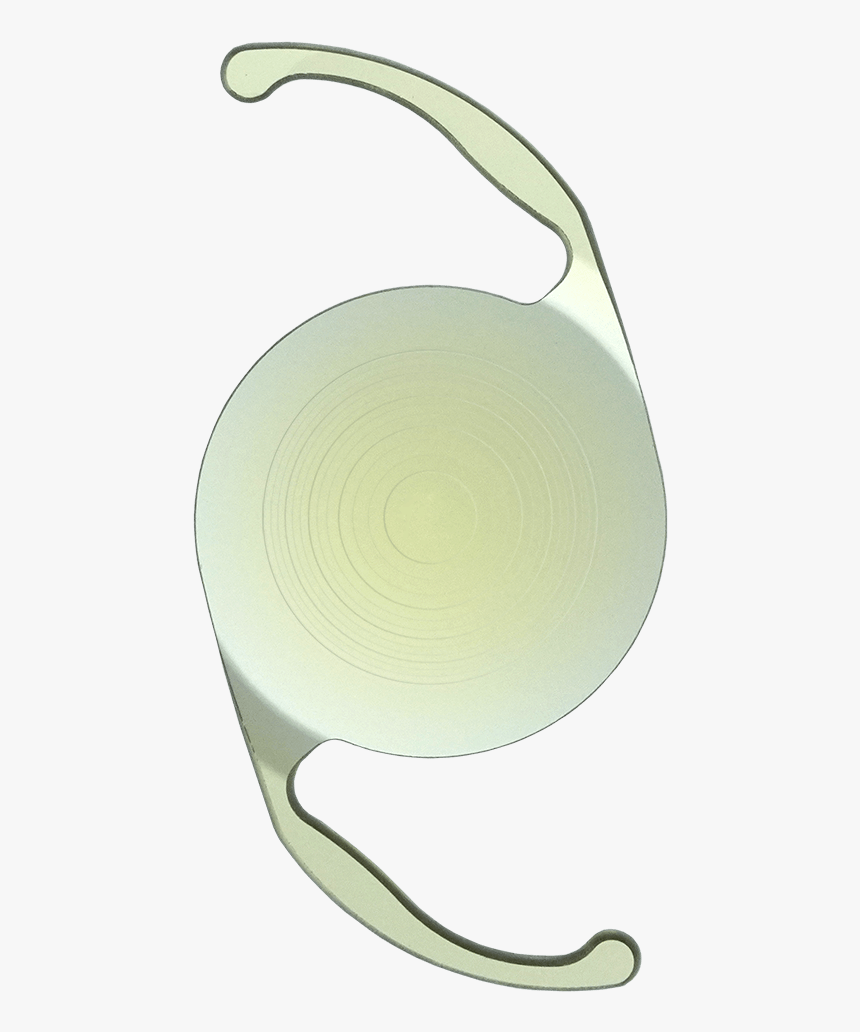
Alcon acrysof IQ PanOptix
What if I don’t have cataracts?
If you want to reduce your dependency on glasses due to presbyopia and aren’t suitable for laser eye surgery (most likely because you’re now in your 50s, 60s or even older), help is possibly at hand. A surgeon can remove your natural lens and insert the trifocal lens for improved visual results. On top of that, you’ll have removed any risk of developing a cataract in that eye.
About Presbyopia
Presbyopia is a common, age-related vision condition in which people have difficulty focusing on things up close. It involves the gradual loss of the eye’s ability to focus on close objects, such as smart phones, computers, books and menus.Almost everyone will experience presbyopia to some degree as they age, with symptoms often first appearing as an individual enters their 40s and continues to worsen into their 60s.The condition is not a disease, so it cannot be cured; however, there are safe and effective ways to correct presbyopia, including eye glasses, contact lenses or refractive surgery.
*Disclaimer …No personal financial interests.This page information is purely for educational /awareness perposes.Consult your doctor for pros and cons before surgery
For details on procedure to get rid of near glasses please click here
Book Consultation for surgery with Trifocal multifocal lenses in Jalandhar
If you want freedom from glasses, schedule your trifocal lens consultation today.
 Experience safe, precise, and advanced multifocal trifocal lens surgery in Jalandhar using the latest technology.
Get a detailed eye check-up to determine the most suitable multifocal trifocal lens treatment for your eyes:
 Personalized treatment plan
Advanced laser technology
Safe & effective vision correction
Take the first step towards a clear, glasses-free life with advanced multifocal trifocal lens technology.
 Call Now: +91-9888265300
 WhatsApp Consultation Available
 Visit our center in Jalandhar
Harpreet Eye and Dental Care Centre
244-R, New Jawahar Nagar, Near City Hospital, Jalandhar – 144001