Get rid of near or reading glasses with RLE in Jalandhar Punjab ,Refractive Lens Exchange (Lens Replacement Surgery) for presbyopia
To Get rid of reading glasses for near by Refractive lens exchange, also called lens replacement surgery or clear lens extraction, may be a better option than lasik or phakik lenses/ICL surgery for people with presbyopia [presence of near vision glasses prescription with age] and high hyperopia [plus number prescription for distance vision]/ (farsightedness).
You can get rid of glasses for near [reading] intermediate and distance in Jalandhar Punjab at our centre Harpreet Eye and Dental Care Centre
If you have both presbyopia and moderate to severe hyperopia [plus number], RLE may be the only viable option for clear vision and minimal reliance on glasses after refractive surgery.
Do you know that …Now you can get rid of glasses for near,distance and intermediate distances [for laptop,computer,car dashboards] with latest ring less multifocal lenses in Jalandhar ,Alcon vivity [for details scroll down] and/or trifocal lenses.click here to know more.
Lens replacement surgery also can correct minus number prescription glasses or myopia (nearsightedness] assosciated with presbyopia [near vision glasses]
The procedure for refractive lens exchange is virtually identical to cataract surgery. The difference is that in RLE, the lens being replaced is clear, rather than a cloudy lens due to cataract
What is presbyopia
Presbyopia is a naturally occurring age-related condition where your eye’s natural lens becomes more firm and inflexible, and you lose the ability to focus on near objects.Presbyopia affects just about everyone and becomes noticeable sometime after age 40 in most cases.
Non-surgical options for presbyopia include reading glasses, bifocal or progressive or multifocal eyeglass lenses, and multifocal contact lenses. Another option is wearing contact lenses for monovision [one eye corrected for distance other eye for near vision]
Refractive surgery such as LASIK, PRK and phakic IOLs cannot directly address presbyopia-induced loss of near vision. And, although recent medical advancements such as monovision lasik [one eye corrected for distance other eye for near vision] and presbyopic phakik lenses etecetra are available, not everyone is a suitable candidate or is within the treatment parameters of these procedures.
What is Clear Lens Extraction or Refractive Lens Exchange – CLE/RLE eye surgery to Get rid of reading glasses or near vision glasses in Jalandhar Punjab
Refractive lens exchange (RLE) replaces your eye’s clear natural lens with an artificial intraocular lens (IOL) to correct your spectacle number and achieve sharper focus, reducing your need for near vision glasses or bifocals.
The procedure has become very common in UK and USA. In UK it is famous as brand name Clarivu
Other names of procedure
- Presbyopia Lens Exchange (PRELEX)
- Refractive Lens Exchange (RLE)
- Clear Lens Exchange
AM I a candidate
Lens replacement could be just what you need if you have any of the following:
- Dependence on bifocal, varifocal or
- multifocal contact lenses or glasses
- Presbyopia
- Long-sightedness
- Short-sightedness
- Astigmatism
- Cataracts
Lens replacement may be ideal if you are over 50, when laser eye surgery is less suitable to correct refractive errors. An added benefit of the procedure is it also prevents you from ever needing surgery for cataracts because natural lens is removed in this procedure and replaced with artificial lens and natural lens is the place where cataract develops.
What is the procedure time:
about 10 minutes per eye
Recovery time:
a few days , most of time you are able to see clearly within 2 to 3 days
Typical results:
clear vision at all distances without glasses or contact lenses
Lenses used to Get rid of reading glasses or glasses for near vision in Jalandhar Punjab
unique tailor-made lens that’s right for you.
We will choose a lens customised to your vision and lifestyle needs. This artificial replacement lens could provide the benefit of being able to focus on near, intermediate and far objects, as previously provided by glasses or contact lenses. It can even correct astigmatism[by use of toric multifocal lenses].The following are lenses available for RLE.
Ringless multifocal Alcon IQ vivity available in Jalandhar Punjab
Vivity is a first-of-its-kind, non-diffractive extended depth of focus IOL with Alcon’s proprietary non-diffractive X-WAVE™ technology, which stretches and shifts light without splitting it. Vivity delivers monofocal-quality distance (far) with excellent intermediate (at arm’s length) and functional near vision (up close).It is surgeons first choice for RLE procedures worldwide.
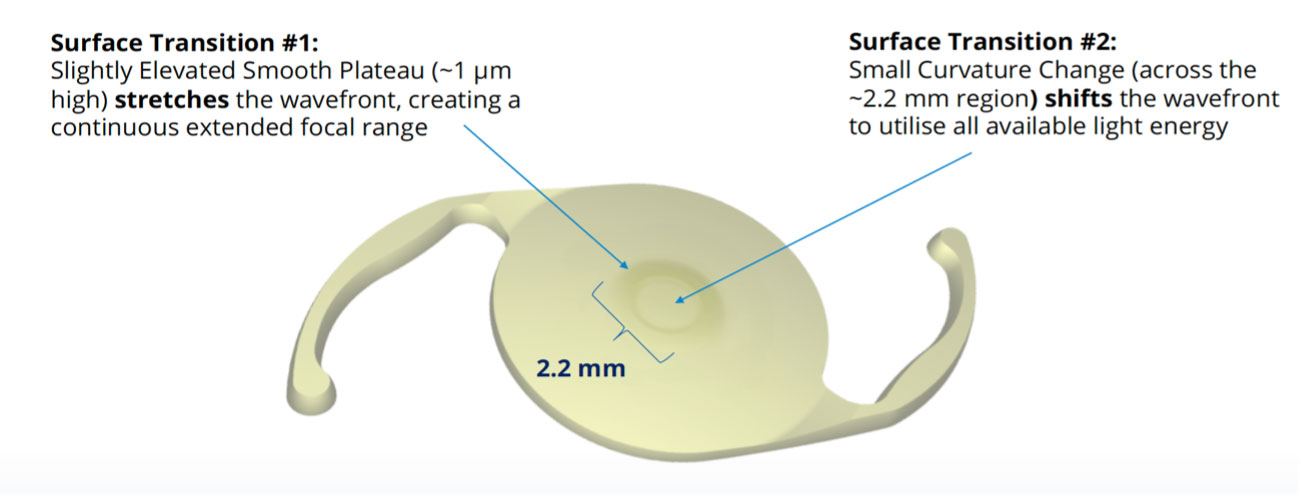
The lens expands Alcon’s growing portfolio of presbyopia-mitigating IOLs to meet the needs of cataract patients who are interested in restoring their visual performance and improving their lifestyle.
Advantages are better contrast,night vision,lack of haloes and glares at night.
More about Alcon IQ vivity [according to their press release]
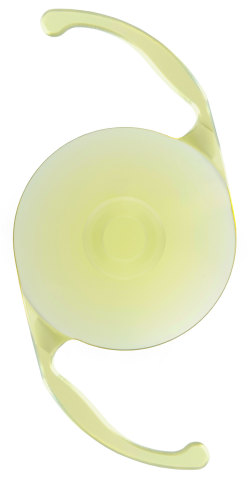
Vivity is a first-of-its-kind, non-diffractive extended depth of focus IOL with Alcon’s proprietary non-diffractive X-WAVE™ technology, which stretches and shifts light without splitting it.1 Vivity delivers monofocal-quality distance (far) with excellent intermediate (at arm’s length) and functional near vision (up close).*2 The lens expands Alcon’s growing portfolio of presbyopia-mitigating IOLs to meet the needs of cataract patients who are interested in restoring their visual performance and improving their lifestyle.
“With the introduction of Vivity, Alcon continues to demonstrate our ongoing commitment to growing our IOL portfolio and delivering differentiated innovations that meet surgeon and patient needs,” said Sergio Duplan, President, North America at Alcon. “We now offer two next-generation presbyopia-mitigating IOL options, with the PanOptix Trifocal for patients who want to be more spectacle independent at all distances and Vivity for patients who seek to improve their intermediate and near vision, with a monofocal-like visual disturbance profile.”
Also available in toric designs, Vivity is built on Alcon’s trusted and proven AcrySof IQ IOL platform that has been implanted in more than 125 million eyes globally.5 According to results from a U.S. clinical trial, patients who had the Vivity lens implanted experienced renewed vision and lifestyle benefits, including:2
- 94% and 92% of Vivity patients reported very good or good vision at distance and arm’s length, respectively, without glasses in bright light, with vision of 20/20 at distance and greater than 20/25 at intermediate*†2
- Comparable visual disturbance profile to a monofocal IOL*2
“The Vivity lens is a disruptive technology that fills a gap for eye surgeons as a presbyopia-mitigating IOL option for those patients who are not candidates for a diffractive IOL platform, but want some spectacle independence,” said Dr. Cathleen McCabe, Chief Medical Officer, Eye Health America and Medical Director, The Eye Associates. “This lens has a monofocal-like visual disturbance profile, a low incidence of severe or very bothersome glare and halos, and provides a continuous extended range of vision which can meet the needs of many cataract patients.”
Vivity received FDA approval in February 2020, and it was made available to select U.S. ophthalmologists in September 2020 during a pilot phase, ahead of the current national launch.
Trifocal lenses ;available in Jalandhar Punjab
These latest-generation lenses are called trifocals because they offer clear vision at intermediate distances, which is generally anything at arm’s length [for laptops, computers, vehicle dashboards etc.] This is in addition to providing near and far vision.
What’s more, trifocal lenses allow a person to switch effortlessly between all three distances – near (reading) distance, long distance and the in between distances. Vision is clear at all those points – something the previous multifocal IOLs couldn’t achieve.
Common trifocal lenses available are ZEISS AT LISA tri [GERMANY], ALCON PAN OPTIX [USA], Biotech OPTIFLEX TRIO [Ireland] Trifocal IOLS
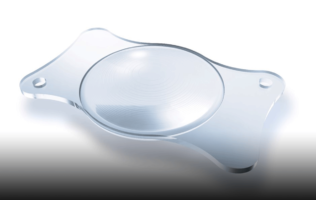
Zeiss AT LISA tri
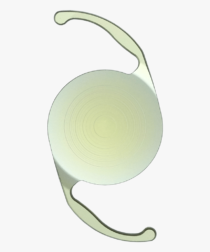
Alcon panoptix
for more information on trifocals click here…
Sympfony Lens
Another presbyopia correcting[ near vision correcting] lenses is Tecnis Symfony lens by jhonson and jhonson which is claimed to be truely presbyopic because of its extended range of vision for near and intermediate distances in addition to distance vision as compared to traditional multifocal lenses listed below which have near vision at a fixed distance only and limited vision at intermediate distances.
Visit ; https://lasiklaserjalandhar.in/symfony-lens/ for details.
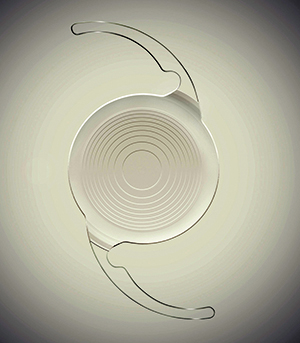
symfony intra ocular lens
Symfony lens is available in both nontoric and toric [for cylnderical error or astigmatism]
Multifocal lenses; available in Jalandhar Punjab
A major appeal of clear lens replacement is the availability of FDA-approved multifocal IOLs (Panoptix by Alcon and Tecnis Multifocal by JHONSON AND JHONSON and accommodating IOLs (Crystalens by Baush + Lomb).
Visit https://lasiklaserjalandhar.in/multifocal-lenses/ for details

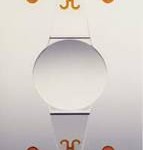
Multifocal and accommodating IOLs enable you to focus at all distances, to overcome presbyopia.
Refractive Lens Exchange: The Procedure to Get rid of glasses for near in Jalandhar Punjab
Lens replacement surgery usually takes about 10 minutes and is performed on an outpatient basis. Each eye is done separately, usually about 4 days apart.
No injection is required only anesthetic drops are used during RLE, so typically there is no discomfort, and most people report immediate vision improvement after surgery.
Initial recovery from refractive lens exchange — when you can resume normal everyday activities usually takes about a week.You should be able to return to work and resume driving within 2 to3 days of surgery, dependent on your eye surgeon’s instructions.
Normally, you won’t feel an IOL in your eye, in the same way that you don’t feel a dental filling for a cavity. The artificial intraocular lens is a permanent replacement for your natural lens and is designed to last the rest of your life.And, because IOLs are not affected by age-related changes, there is minimal risk of regression (loss of corrective effect or deterioration of vision) over time.Also, since the lens is situated inside your eye and not on the surface like a contact lens, it is not visible to the naked eye.
Have early cataracts ?
RLE Can Be Considered a Treatment for Early Cataracts
People who are middle-aged or older may have the beginnings of cataracts that eventually could worsen and require cataract surgery. If you have early cataracts, you could choose to have lens replacement surgery instead of waiting for the cataracts to progress to the point where they cause vision loss and have to be removed. Intraocular lenses can provide significantly better uncorrected vision at that point, especially if you are reliant on eyeglasses or contact lenses.
How is lens replacement different from standard cataract surgery?
During cataract surgery, the eye’s cloudy natural lens is replaced typically with a monofocal lens. This usually provides good distance vision but means you will still be reliant on reading glasses after the procedure. Lens surgery with a multifocal lens could correct long or shortsightedness at the same time. So, you could consider cataract refractive surgery which removes your cataract and includes a lens surgery procedure to help you eliminate or reduce your dependence on glasses.Read more about cataract surgery cost price in Jalandhar
Book Consultation for RLE in Jalandhar
If you want freedom from glasses, schedule your RLE consultation today.
 Experience safe, precise, and advanced RLE surgery in Jalandhar using the latest technology.
Get a detailed eye check-up to determine the most suitable treatment for your eyes:
 Personalized treatment plan
Advanced technology
Safe & effective vision correction
Take the first step towards a clear, glasses-free life with advanced RLE technology.
 Call Now: +91-9888265300
 WhatsApp Consultation Available
 Visit our center in Jalandhar
Get Rid of Reading Glasses
See clearly for reading, mobile, and distance without glasses using advanced ringless multifocal lens technology and RLE procedure.
Harpreet Eye and Dental Care Centre
244-R, New Jawahar Nagar, Near City Hospital, Jalandhar – 144001
 Find us on Google
Follow us on Instagram
Follow us on Facebook
Subscribe on YouTube
DISCLAIMER ;This page is just for your information.We have no financial interests in any company brand .Consult your doctor for pros and cons before surgery
FAQ -frequently asked questions
Can reading glasses be removed permanently?
Many patients can reduce or eliminate their dependence on reading glasses through advanced procedures such as PresbyMAX laser treatment, multifocal lens surgery or Refractive Lens Exchange (RLE), depending on their age, eye health and individual suitability.
What is PresbyMAX Laser treatment?
PresbyMAX is an advanced laser vision correction procedure designed to improve both near and distance vision. It helps suitable patients reduce dependence on reading glasses while maintaining good overall visual quality.
Who is a candidate for reading glasses removal?
Adults experiencing difficulty with near vision due to presbyopia may be suitable candidates. A comprehensive eye examination is essential to determine the most appropriate treatment option.
What treatment options are available for reading glasses removal?
Treatment options may include PresbyMAX Laser, Refractive Lens Exchange (RLE), multifocal intraocular lenses, EDOF (Extended Depth of Focus) lenses and other customized vision correction procedures based on individual visual needs.
Is reading glasses removal surgery painful?
No. Most procedures are comfortable and performed using anesthetic eye drops or local anesthesia. Patients usually experience little to no pain during treatment and only mild discomfort afterwards.
How long does the procedure take?
Most reading glasses removal procedures take only a few minutes per eye. However, patients should allow additional time for pre-operative preparation and post-procedure observation.
How soon can I return to normal activities?
Many patients can resume routine daily activities within one to two days, depending on the procedure performed and their individual healing response. Your surgeon will provide personalized post-operative instructions.
Are the results permanent?
The vision correction achieved is generally long-lasting. However, natural age-related changes in the eyes may continue over time, and regular eye examinations remain important.
Can cataract surgery also remove reading glasses?
Yes. Premium multifocal, trifocal and EDOF intraocular lenses implanted during cataract surgery can significantly reduce dependence on reading glasses in suitable patients.
Is reading glasses removal available in Jalandhar?
Yes. Harpreet Eye and Dental Care Centre, Jalandhar offers advanced solutions for reading glasses removal, including PresbyMAX Laser, multifocal lens surgery and Refractive Lens Exchange (RLE), after a detailed eye evaluation.
Explore More Cataract Treatment/vision correction Options
- Cataract Surgery Cost in Jalandhar
- Best Cataract Surgeon in Jalandhar – Dr Harpreet Singh
- MICS Cataract Surgery in Jalandhar
- Multifocal Lens Cataract Surgery in Jalandhar
- Guide to refractive eye surgeries in Jalandhar
- Complete Guide to LASIK Eye Surgery in JalandharCost of ICL Surgery in Jalandhar
- Best Eye Hospital in Jalandhar